


One of the essentials of organization and hygiene in the kitchen is storing food properly. Although both products offer the aesthetic and health benefits of enamel coating, they differ according to their areas of use. An enamel storage container is preferred more for refrigerator use and storing cooked meals, while an enamel jar is more suitable for dry foods, jams, and pickles. These two options among enamel kitchenware promise both a stylish look and long-lasting use.
Which is More Useful: Enamel Storage Container or Enamel Jar?
Needs vary in every kitchen, and the products to be used change according to these needs. So, which is more suitable for you, an enamel storage container or an enamel jar?
An enamel storage container is ideal for storing food in the refrigerator. Thanks to its heat resistance, hot meals can be placed directly inside.
An enamel jar is more suitable for dry pulses, jams, spices, and pickles.
Enamel storage containers usually come with lids, which prevent odors from spreading and spills. The non-transparent structure of an enamel jar can increase the shelf life of the items inside by protecting them from sunlight. If you are storing liquids or cooked meals, your choice should be an enamel storage container. For dry food storage or long-term preservation, an enamel jar is more advantageous. Both products stand out among enamel kitchenware for their aesthetic appeal. Depending on your kitchen organization and needs, it may be ideal to own both.
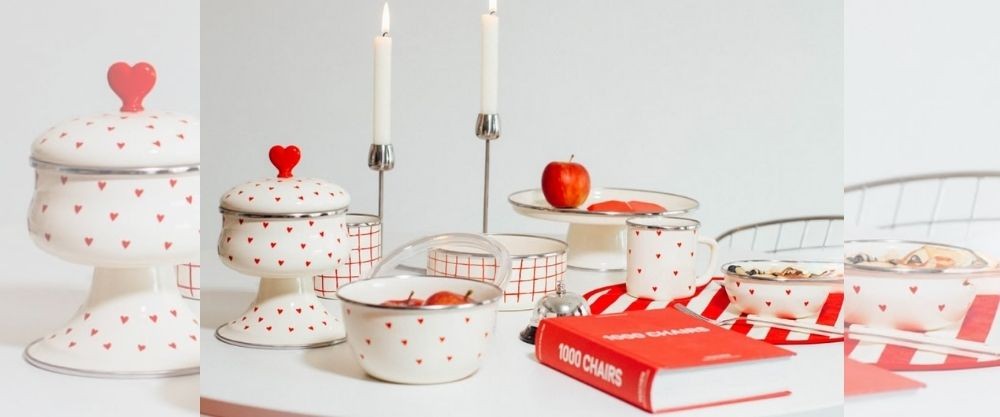
Is There a Difference in Durability Between Enamel Storage Containers and Enamel Jars?
Enamel kitchenware is generally preferred for its durability. However, there are some differences between an enamel storage container and an enamel jar.
Enamel storage containers usually have a thicker structure, which makes them slightly more resistant to impacts. Enamel jars, on the other hand, are mostly designed to be thinner and more elegant, which can make them sensitive to scratches. Both products should be handled with care against dropping, as the enamel surface can crack or become damaged.
An enamel storage container usually comes with a metal lid, which provides extra protection. Jars may sometimes have glass or wooden lids, requiring extra caution in case of impact. Both products are rust-proof because the enamel coating protects the metal from external influences. In terms of heat resistance, the enamel storage container stands out; it can be used on the stove or in the oven, whereas the jar is not suitable for such processes.
For Which Foods Should You Choose an Enamel Storage Container vs. an Enamel Jar?
Choosing the right storage container is crucial to maintaining food freshness. Enamel kitchen products are quite reliable in this regard. However, each product has its own unique advantages:
- For hot foods like cooked meals, soup, and stews, an enamel storage container should be preferred.
- For dry foods, pulses, coffee, and tea, using an enamel jar is more suitable.
- Jars stand out for products that require long-term storage, such as jams, marmalades, and pickles.
- The enamel storage container is ideal for refrigerator storage and reheating.
- The enamel storage container is also quite practical for salads, appetizers, and leftovers.
- Enamel jars provide an aesthetic look on shelves and facilitate food organization.
- For components of sweets or baked goods (sugar, flour, cocoa), jars are much more useful. Therefore, setting aside space for both products in your kitchen will make things easier.
| Usage Area / Feature | Enamel Storage Container | Enamel Jar |
| Usage Location | Inside the fridge, tabletop, oven | Pantry, open shelf, countertop |
| Food Type | Cooked meals, soup, salad, appetizers, leftovers | Dry pulses, coffee, tea, sugar, flour, jam, pickles, marmalade |
| Heat Resistance | High – can be used in the oven and on the stove (with a diffuser) | Low – should not be exposed to direct heat |
| Storage Duration | Short/medium-term storage – daily or multi-day use | Long-term storage – shelf-stable for months |
| Lid Feature | Enamel lid – closes tightly, provides leak-proofing | Enamel lid – closes tightly, but use caution with liquid products |
| Light Protection | Opaque surface – provides partial protection | Fully opaque – high protection against light, extends shelf life |
| Aesthetic Appearance | Simple, modern, and functional design | Vintage, rustic, and decorative appearance |
| Surface Durability | Thick enamel – more impact resistant | Thin enamel – more sensitive to scratches and impacts |
| Cleaning and Maintenance | Hand washing recommended, avoid hard sponges and chemicals | Must be hand washed, handle gently to avoid scratches |
| Suitable Contents | Hot meals, olive oil dishes, desserts, salad, appetizers, soup | Dry foods, jams, pickles, coffee-tea, sugar, flour, cocoa |
| Usage Frequency | Frequent – suitable for daily use | Occasional – for long-term storage, not opened frequently |
Which Provides Longer-Lasting Use: Enamel Storage Container or Enamel Jar?
Enamel kitchenware is known for its durability. However, longevity can vary depending on usage. Enamel storage containers are suitable for frequent use because they can be used in both the refrigerator and the oven. They are resistant to high heat and sudden temperature changes, which extends their lifespan. Enamel jars are intended for more stationary use, usually kept in dry and cool environments.
Jars can be used for a very long time if not opened and closed too frequently. If both products are washed by hand, the enamel surface will wear out less. It is necessary to avoid hard sponges and chemical cleaners to prevent scratches on the surface. If the leak-proof feature of the lid is maintained, both the storage container and the jar can be used for many years.
Enamel storage containers and enamel jars are two indispensable kitchen helpers with their healthy and aesthetic structures. When choosing between enamel kitchen products, it is enough to consider your needs. While the enamel storage container offers an ideal solution for cooked meals, salads, and liquid contents, the enamel jar is more suitable for pulses, jams, and dry foods. Both products can be long-lasting with careful use and cleaning. You can determine the most suitable combination based on your kitchen's organization, healthy eating habits, and aesthetic preferences.


